Training4cyclists.com

Heart Rate Monitor and Power Meter Training

My Goals as Cycling Coach 2008

I thought it might be interesting to have a little insight look to my work as cycling coach in 2008.

This season I have significantly reduced the number of riders I plan training for. Thus, I have only 2 riders that receive training plans in 2008. These two riders are both very talented and focused on optimizing their training with power meters, so I still spend quite a lot time on coaching. The most important reason I have reduced the number of athletes is time. July 2007 I became dad for the very first time and in January 2008 I finally graduated as medical doctor at the University of Aarhus.

Becoming dad was the most fantastic experience ever and makes every day even better. Thus, I have naturally given the highest priority to my little daughter, Lea. Finishing of my studies on the university also took a lot time and starting in my first job as medical doctor is obviously also quite time consuming. These two factors made me conclude that I had to reduce the number of athletes if I shouldn’t reduce the quality of what I did.  
 
As I mentioned previously, I will only be coaching two riders this year.

U23 rider makes progress with SRM power meter

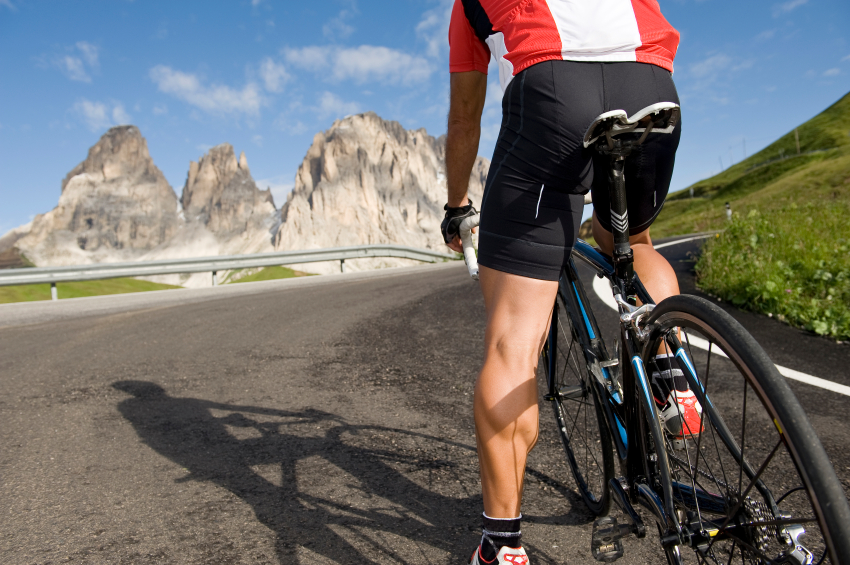
The first rider is Jakob Bering who is riding his second season as U23 rider. He rides for a continental team called Team Designa Køkken. I have been coaching him for more than 6 years. He won a silver medal at the national championships for U23 last season and played a central role in Denmark’s team victory in Tour de l’Avenir (Tour de France for U23). He is a climber and is currently training very hard to peak his performance in a stage race in April. Hopefully he will be representing Denmark in the U23 World Championships later this year.
 
Jakob uses a SRM power meter in all intervals and until now I have been very satisfied with the numbers I receive in my inbox. He is stronger than last year and compared to last season we’ve known the dates for peak performance in months. There is a huge difference from planning a peak performance in two months instead of just two weeks (or less..!). Now he is a more integrated part of the national team, which gives me a better possibility to plan his training and tapering compared to last year where every little stage race was like having an exam. When I plan a tapering protocol for a specific race I usually start at the peaking moment and work backwards. If I have 14 days, I start with the day before the big event, then the day before that one and so on until I reach day 1 in the program.

Tapering protocol is a corner stone

Thus, my programs are often identical in the final period because the tapering protocol is a corner stone in all my training programs. Though these tapering protocols look identical they might be adjusted to some specific requirements in the upcoming event.

Junior rider focusing on climbing

My other rider is Rasmus Malmkjær who is a talented junior rider. He rides on a very strong junior team which is probably the strongest junior team in Europe (Team Festina Hobro). His speciality is climbing steep climbs, so I hope that he will make some good results in some international junior races in southern Europe this year. He uses a Polar CS600 to optimize his results. Climbing is his number one skill, but on home ground in Denmark he will still be a strong rider, though he will be not strong enough to compete with the best riders on windy, flat roads. My biggest challenge is to make him produce as many watts as possible compared to body weight, making him an even better climber. We won’t focus much on flat races, because that will never be his speciality.

Challenging jobs as cycling coach in 2008

Thus, I have some really challenging and exciting jobs as cycling coach this year even though I have significantly fewer riders. I have received several emails with questions about why I’m not posting so often and I hope that this post explain why. Since July 2008 I have re-published some articles that deserved some additional attention. I hope that all readers understand and in some way respect this decision.

What coaching jobs I will do in 2009 is still uncertain.

If you have any questions or comments to my plans for 2008, feel free to post a comment.

What is a good resting heart rate?

This is a very common question among cyclists. I have heard several people discuss this topic and have often seen them compare registrations of early morning resting heart rates. The fact is that you can only compare these values with your own previous registrations. The reason for this is that we all have a different anatomy of our cardiovascular system. But these systems are all based on the same physiological mechanisms. Thus, we can learn from each others’ physiological experiences and adaptations, but we can’t compare individual heart rate values. E.g. your resting heart rate is 58bpm while your friend’s heart rate is 42bpm, still I can’t say which one of you are in the best shape nor have the highest VO2 max.

Autonomic nervous system regulates resting heart rate

The resting heart rate is closely related to the autonomic nervous system. You will probably already have noticed that your resting heart is lower when you are in good shape. This is because of a larger stroke volume or more correctly a bigger parasympathic drive on the sinus node. This is one of the central adaptations to endurance training.

Know your resting heart rate

A good reason to know your normal level of resting heart rate is that you can use it to discover overtraining or illness. If your resting heart rate is 10-15 beats above normal, you might have a disease. In that case I will recommend you take your temperature and look for other symptoms. Avoid intensive training or races if you don´t feel well.

Some values to compare with (don’t do it…)
There are great deviations in normal resting heart rates. Many well trained cyclists normally have a resting heart rate in the 40’s, some in the high 30’s and few in the low 30’s or lower. There are also well trained cyclists or even professionals in the high 40’s or low 50’s. And as I said previously: Don’t compare values with others’…

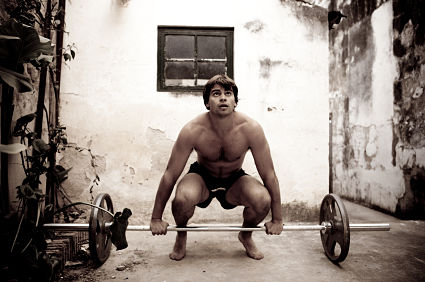
Strength training without additional body mass - 1

I often hear that cyclists skip strength training because they are afraid they will gain additional body weight. In this series I will try to explain how cyclists can strength train without gaining extra body weight. You can read the rest of the series here: 1 – 2 – 3 – 4 

1. Why additional body weight should be avoided

Larger muscle cells (that will say larger square diameter) can generate more power. That is the most commonly known way to increase power, though it is not desirable for cyclists. The problem is that a large muscle mass is heavy to carry and there is a dilution of mitochondrias. Additional body weight will slow you down when you climb or accelerate your bike. Notice that I include accelerations, because many riders forget that their body weight also matters when they accelerate their bike out of a corner. Enthusiasts riding with power meters may have introduced you to the term ‘power to weight ratio’. That refers to how many watts you can push compared to your body weight. That ratio has a huge impact when you climb (or accelerate…)

Thus, an increment of maximal strength made through hypertrophy will probably not result in a better overall cycling performance. When I recommend strength training for cyclists, I focus on strength gains through neural adaptations. 

So I should drop strength training to avoid additional body weight?
No, it is very unlikely that you will gain weight if you use the principles I advocate for here in this article series. There are some simple tricks you can do to minimize or in fact eliminate hypertrophy. As you can imagine, there are millions of people in the world trying to bulk muscles, but only the most dedicated people are succeeding in their project. The reason for this is that just like in cycling you will have to be very determined about how you train, how you eat and how you live if you want to be successful. So building muscles is not as easy as you might think. And they won’t come overnight.

Why I Would Recommend The SRM Training System

The SRM Training System was the first power meter for road cyclists on the market. SRM uses a special crank system which measures the workload you apply. Thus, it is a direct measurement of the workload. That makes a lot more sense than the indirect methods used by e.g. Ibike Pro.

Several years of experience
SRM has had several years to optimize their products with valuable experience from top riders and scientists who have used SRM as power meter. As I have mentioned earlier, one of the best ways to learn more about power meters (or heart rate monitors for instance) is to spend several hours on the roads with the power meter mounted. The more data you can accumulate, the better picture you will get of your performance and what a power meter can do for you. Reading about training principles and basic exercise physiology will naturally help on your learning curve, but don’t underestimate the value of practical experience.

I think that SRM has a huge advantage against the new generation of power meters like PowerTap. These cranks are really good, comparable with stiffness from the best cranks on the market (though they are slightly heavier). A crank is a part of the bike so there is no problem when you e.g. want to put on your new carbon wheels for a special race. The SRM is still there and works properly.

Gold standard
SRM is the gold stand for power meters with very accurate measurement of workload. It’s a high quality product that will not disappoint you.

Review of SRM, Power Tap and Polar

SRM FSA Crank

Kraig Willett has made a comprehensive review of the three most used power meters: SRM, Power Tap and Polar. He explains in details how these power meters measure power output and presents results from his tests. He gives us a very detailed review of how SRM, Power Tap and Polar perform in price, performance, and durability. The review might be a bit difficult to understand for beginners, but it is really worth reading.

Here are some of the points from Kraig Willett:

On how the SRM crank system measures power output
“Instrumenting a mechanical structure allows one to convert the phenomenon of interest into an electrical signal that can be subsequently analyzed, mathematically manipulated, and then displayed to the user.  Strain gages do just that in the SRM power measuring device. 

The strain gages that SRM uses are nothing more than a piece of foil embedded in a plastic carrier.  The resistance of the foil element changes depending on how much it is stretched/strained.  The strain gages unique characteristic of changing resistance under strain is what allows the mechanical deflections that naturally occur in the structure to be converted into an electrical voltage signal.”

On accuracy of power meters
“Additionally, it can even be argued that absolute accuracy is not an issue, but rather, consistency over time or measurement repeatability is most important.” 

On installing a Power Tab hub
“The Power Tap system is just about as close to ‘Plug and Play’ as one can get.  The straightforward steps of installing a cassette and a tire on the wheel built with the Power Tap hub are nothing too difficult for your average bike racer.  Once these steps are accomplished, one must simply drop the wheel in the dropouts and install the receiver and CPU mount with the supplied zip ties.  The whole process should take 30 minutes at most.”

Read the full review of SRM, Power Tap and Polar

How to train for anaerobic endurance

I guess all of you have tried this kind of activity on your bike. We are talking about biking at intensities that can only be maintained for a very few minutes or maybe just seconds. These jumps require anaerobic power which can be trained separately in your training program. There are made several tests to measure maximum oxygen uptake in the lab, but unfortunately there are no similar possibility to measure anaerobic power. Thus, we have to develop indirect methods to evaluate anaerobic power. I think that testing with a power meter will be the best evaluation of anaerobic power for most riders. Find your average power output in a 60sec. all-out test.

Lactate is not responsible for fatigue

One of the biggest myths about anaerobic power is that lactate is responsible for the fatigue. Lactate is just a piece of sliced sugar and a couple of studies have shown that lactate itself does not produce fatigue, in fact one of the studies I will present in the future claims that lactate actually protects the muscles from fatigue. There are probably many reasons why we determine exercise at severe intensity.

Road cyclists don´t train enough anaerobic power

Road cycling is an aerobic discipline with more than 98% of the work covered by aerobic metabolism. Thus, most cyclists don’t offer much attention to training of anaerobic processes. They train for aerobic power and focus on lifting up their anaerobic threshold. Having a high VO2 max and a high anaerobic threshold are the two most important physiological factors with impact on your performance. Nevertheless, many races have breaking points were anaerobic power is essential. If you don’t have enough anaerobic power, you will not be able to drop the riders behind you. What you need is anaerobic power that gives you extra punch in your attacks.

Strong riders don’t win if they lack anaerobic power
If you feel comfortable during the race, just waiting for the moment to attack, then unsuccessful attacks might be caused by insufficient anaerobic power/sprint. What happens is that the whole bunch reacts when you start to jump and catch you quickly because there is not enough punch in your jump. Also the other riders may be extraordinary aware of your attacks since you have showed that it’s not a problem for you to stay in the group.

So how can we solve this problem?
Focused anaerobic training with a power meter! Anaerobic training has never been easier than now. Power meters make it so much easier to produce the correct workload during the intervals (pacing control during a 40seconds interval is really difficult without a power meter). If you have been riding on track, you will know how much influence pacing control has on performance. I guess that we all have tried to start out too fast on time trial on the roads, but what I try to say, is that hurts so much more when it happens in short events like a 1000m or just in a short interval. If you are not able to maintain watts in the end of a interval, I’m pretty sure that a power meter will help your pacing and after a couple of months you will see that your training is more effective and gives better results.

Anaerobic endurance program

I have made a program for anaerobic training that could be used to develop a higher level of anaerobic endurance. This program is a part of the indoor training programs.

15 minutes - warm up (increasing intensity)
5 x (60sec. maximum intensity + 6 min. recovery)

This program is designed to increase your anaerobic capacity. During the intervals the body is exposed to enormous amounts of anaerobic metabolites. After only a few of these sessions your body will be better to work at an anaerobic environment. This skill is primarily used in competitions, where jumps and sprints demand anaerobic efforts. This art of training is very exhausting and therefore it should primary be used for competition preparation.